

Likeness Is Only the Beginning
On portraiture, artistic freedom and what happens when a person is seen through an artist’s eyes.

Sometimes I show a portrait and hear, “It doesn’t quite feel like him.”
I understand this. Especially in commissioned portraiture, recognition matters. We know the people we love through hundreds of familiar expressions, gestures and tiny details.
Still, I sometimes look back at the painting and feel genuinely surprised, because to me, the person does look like that.
Perhaps not exactly as they appeared in one photograph. But very much as I saw them.
Most of us know how unreliable a single image can feel. In one photograph we recognise ourselves immediately. In another, taken only minutes later, something seems strangely unfamiliar. A different angle, light or expression can alter the entire impression.
A single photograph may preserve a likeness, but it cannot contain a whole personality.
This is why I often find painting from one reference more difficult than painting someone I have encountered in person.
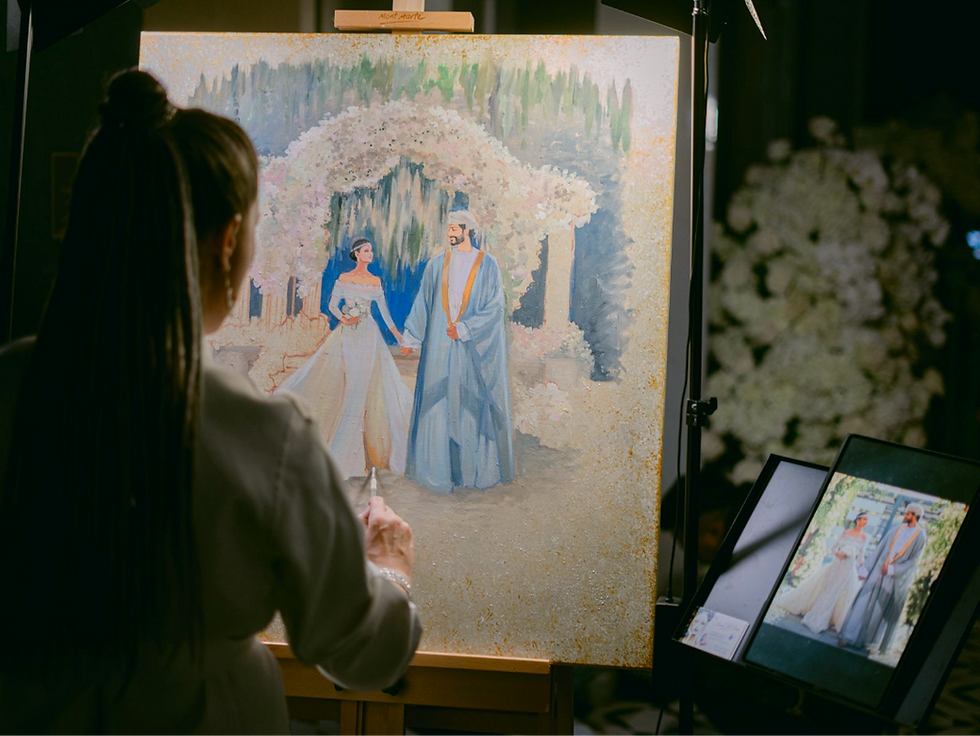
At a wedding or private event, I see much more. I notice how someone moves, how their face changes in conversation, how they carry themselves, how a bride inhabits her gown rather than simply wears it. I see the person from different angles and in changing light.
By the time I begin painting, I am no longer responding to one frozen frame. I have formed an impression.
And that impression enters the work.
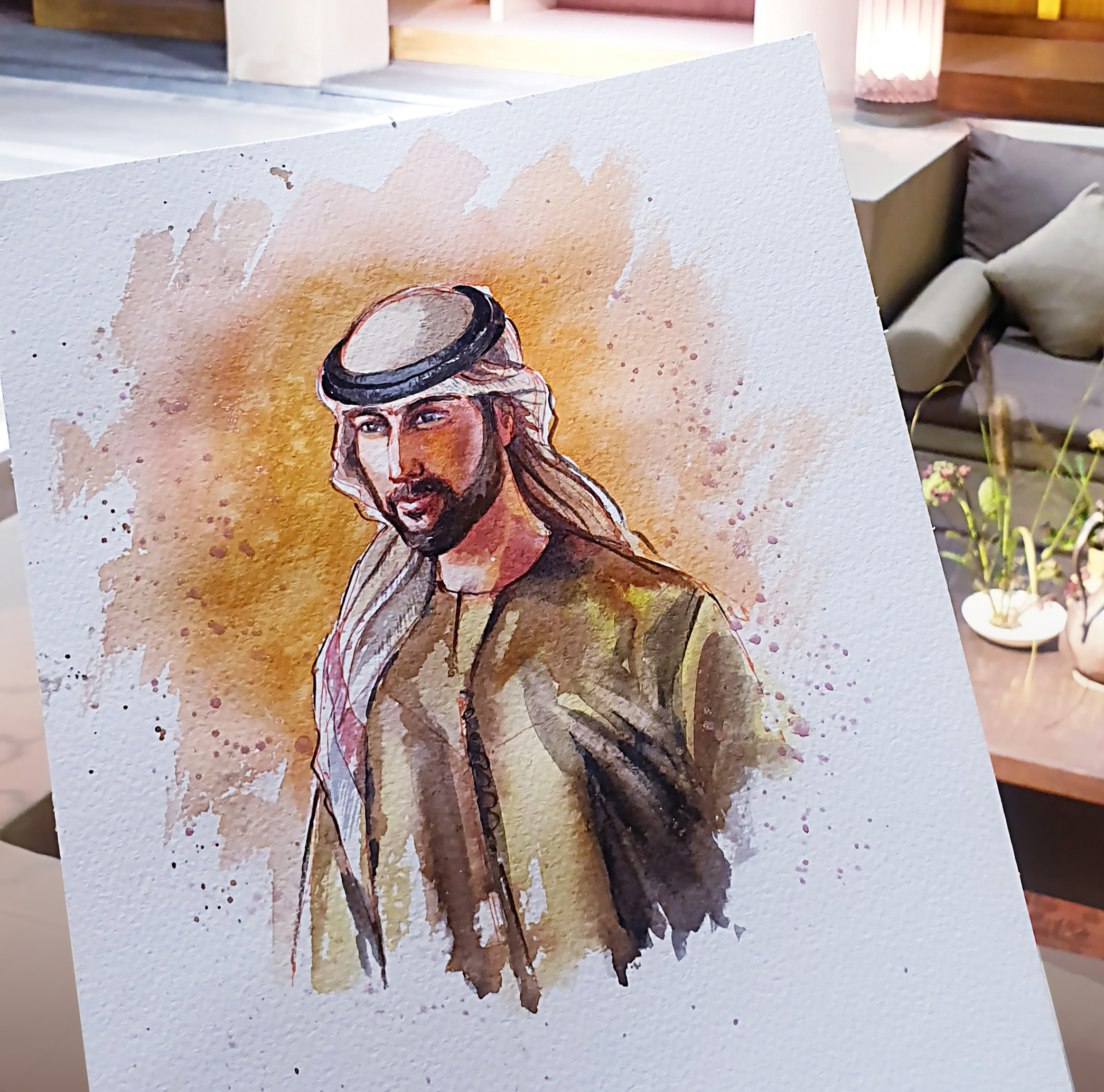
When Likeness Becomes a Boundary
There is a quiet tension in commissioned portraiture.
If someone questions the resemblance, the safest solution is to return to the photograph and follow it more closely. The exact contour of the face, the angle of the mouth, the position of the eyes. The reference and the painting can then be placed side by side, and the likeness becomes easier to defend.
But something changes creatively.
I stop asking, What did I see in this person? and begin asking, Will this be approved?
Those are very different questions.
Of course, likeness matters. But I increasingly believe it should be the beginning of a portrait, not its boundary.
Otherwise painting risks becoming a slower way of reproducing a photograph.

The Person I See
I do not consciously try to make people more beautiful.
Yet my own visual language inevitably changes what appears on the surface. Figures become slightly more elongated, movement more fluid, certain details softer or more pronounced.
My background in fashion design and fashion illustration shapes the way I understand proportion, silhouette and elegance. But some choices are more intuitive than that.
Sometimes I simply notice a quality in someone and it becomes stronger in the painting. A softness. A confidence. A certain grace.
I am painting towards the version of that person that became most vivid to me.
Perhaps that is why somebody may say, “She doesn’t look exactly like that,” while I am looking at the portrait thinking, But that is how she felt to me.


Choosing an Artist Means Choosing a Way of Seeing
This is why choosing a portrait artist should involve more than technical skill.
You are choosing a sensibility.
Every artist carries an invisible archive of education, culture, taste, memory and instinct. Ten artists could paint the same person and create ten recognisable portraits that feel entirely different.
That difference is not a flaw. It is authorship.
Even in commissioned work, I want enough space for that authorship to remain alive. The person should recognise themselves, but the painting should also carry the way I saw them.
A portrait may tell us what someone looked like.
But it can also preserve something less literal: what another human being noticed, what remained in memory, what became beautiful through attention.
Perhaps the most meaningful portrait is not a mirror. It is an encounter.
Comments